ABOUT US
Sed ut perspiciatis unde omnis iste natus error sit voluptatem
accusantium doloremque laudantium, totam rem aperiam,
GET A FREE QUOTE

What Makes Rotary Drilling Rigs a Smart Choice for Deep Foundations?
-
 author
 - 24,September
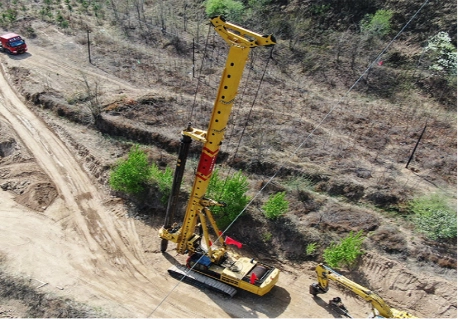
Deep foundation work is becoming harder to plan. Contractors are asked to drill deeper piles, work in tighter urban spaces, meet stricter safety rules, and finish projects with fewer skilled workers. At the same time, bridges, high-rise buildings, rail projects, data centers, and energy infrastructure need stronger foundations than ordinary shallow systems can provide.
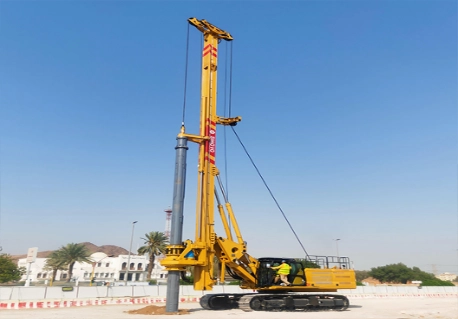
That is why rotary drilling rigs for deep foundations remain a practical choice for many contractors. A good rotary rig brings torque, crowd force, drilling depth, tool flexibility, and controlled operation into one machine. It can form bored piles in soil, gravel, and weathered rock while keeping the jobsite more organized than many older methods.
Industry outlooks for 2026 point to labor pressure, cost pressure, and strong demand from infrastructure and energy-related construction. These trends make equipment choice more important. A rig that saves one or two hours per pile can change the economics of a large project.
Deep Foundations Need More Than Drilling Depth
A deep foundation project is not successful just because the hole reaches the target depth. The pile must be formed safely, accurately, and within the planned cycle time. For contractors, this means every machine movement matters: positioning, drilling, lifting, soil unloading, tool change, casing work, and relocation.
A rotary drilling rig is useful because it can handle several of these steps with controlled power. Still, buyers should not judge a rig by depth alone. They need to look at the full working system and ask how the machine behaves when the ground changes.
Load, Ground, and Pile Design
Deep foundations carry large building or bridge loads down to stronger ground layers. These loads may require large pile diameters, long boreholes, and tight verticality control. In mixed ground, the rig may pass through clay, sand, gravel, boulders, and weathered rock in one bore.
The right rotary piling rig should match:
- Required pile diameter
- Maximum drilling depth
- Ground hardness
- Groundwater condition
- Casing need
- Kelly bar type
- Site access
- Daily pile target
- Tooling plan
When these factors are not matched, the rig may still drill, but output drops. Tool wear rises. Operators spend more time correcting the hole, unloading soil, or changing tools.
Why Rotary Drilling Rigs Improve Productivity
Productivity in deep foundation drilling is not only speed at the cutting face. It is the full rhythm of the work. A machine that drills fast but unloads slowly may not improve the final daily output. A compact machine that reaches the site easily may outperform a larger rig in an urban job.
Rotary drilling rigs are smart because they give contractors a balanced system. The machine combines rotary torque, crowd force, lifting power, mast control, and drilling tool support. That balance is what turns power into usable production.
Torque and Crowd Force
Torque helps the drilling tool cut and rotate through dense soil, gravel, and rock layers. Crowd force pushes the tool into the formation and keeps the cutting face engaged. Together, they decide whether the machine can keep a stable penetration rate.
For deep foundations, high torque is especially useful when drilling large-diameter piles or hard layers. But torque alone is not enough. The hydraulic system must deliver smooth force, and the operator must be able to adjust rotation speed and pressure as conditions change.
A modern rotary drilling rig range should give buyers several machine classes instead of one general-purpose answer. Smaller rigs fit limited-access sites. Larger rigs support deep, wide piles and difficult ground.
Winches, Kelly Bars, and Tool Handling
Deep piles need strong lifting and reliable Kelly bar handling. If the main winch is slow or unstable, every drilling cycle takes longer. If the Kelly bar is poorly matched, torque transfer becomes weak and vibration increases.
A good deep foundation system should include:
- Suitable friction or interlocking Kelly bar
- Strong main winch
- Stable auxiliary winch
- Reliable mast support
- Correct tool connection
- Fast soil discharge
- Safe lifting control
At SINOVO Rig, we design our products around actual foundation cycles. Our equipment range includes rotary drilling rigs, piling equipment, core drilling machinery, and related underground construction solutions.
Hydraulic Control Makes the Difference
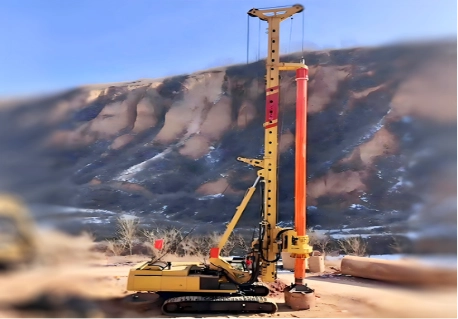
A hydraulic rotary drilling rig gives operators fine control over rotation, crowding, lifting, walking, and mast movement. This is important because deep foundation drilling rarely happens in perfect soil. Conditions change, and the rig must respond without sudden shock or wasted movement.
A hydraulic rotary rig is also helpful when the site needs steady control rather than brute force. The operator can manage torque, feed, and lifting action more carefully, which helps protect the tool and improve hole quality.
Stable Operation in Mixed Ground
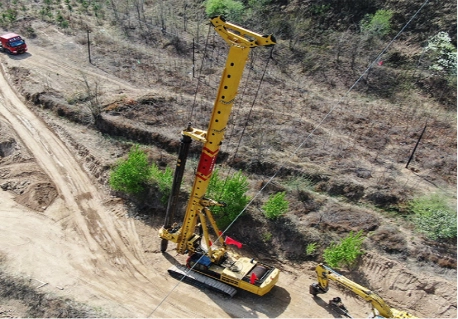
Mixed ground is one of the main reasons contractors choose rotary equipment. A single pile may start in soft fill, pass through sand, then meet gravel or weathered rock. The drilling method must adapt before the hole becomes unstable.
Useful equipment features include:
- Adjustable rotation speed
- Strong crowd and extraction force
- Stable crawler base
- High mast stiffness
- Tool compatibility
- Casing support
- Clear operator feedback
This is where a hydraulic rotary drilling rig can help reduce unnecessary stops. Instead of forcing one drilling behavior through every layer, the operator can adjust the machine to the ground.
Tools That Make Deep Foundation Drilling Smarter
A rotary rig is only as effective as the tool at the end of the Kelly bar. Contractors often lose output not because the machine is weak, but because the tool does not match the layer.
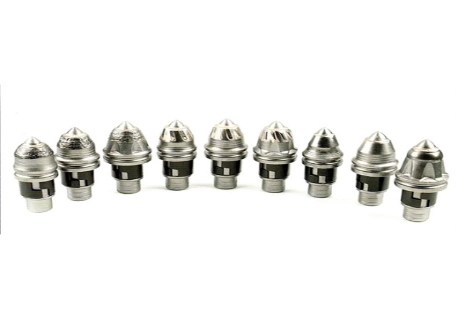
For deep foundations, common tools include augers, clay buckets, sand buckets, rock buckets, core barrels, casing tools, and CFA tools. Each has a job. Using the wrong one can slow drilling, damage the hole, or increase fuel use.
Core Barrels and Rock Tools
When the bore meets hard rock or boulders, contractors may need stronger cutting tools. Core barrels and rock buckets help break or remove hard material in stages. A core drill bit attachment may support localized sampling or technical checks, but it is not the same as a full foundation drilling tool package.
In some projects, diamond core drilling is used before construction to study geological conditions. This can help teams understand rock strength, fractures, or layer changes. It is different from well drilling in rock, but both activities show why tool selection matters in hard formations.
Buyers sometimes see terms such as rotary hammer core bit or hydraulic hammer pile in technical searches. These terms should be checked carefully. A rotary hammer core bit is usually a drilling accessory. Hydraulic hammer pile methods belong to a different pile-driving or breaking context. They should not be confused with rotary bored pile construction.
Urban Deep Foundations Need Special Rig Choices
Cities create a different kind of challenge. The ground may be difficult, but the bigger problem is often space. Contractors may work under bridges, inside factories, near old buildings, beside traffic, or in sites with strict noise and movement limits.
Urban height-limit piling rigs are designed for these conditions. They help contractors work where standard tall-mast machines cannot safely enter. The machine must still provide enough torque, crowd force, and stability, but within a lower working height.
Low Headroom Work
A height-limit piling rig with hydraulic system can support bored pile construction in restricted spaces such as indoor foundations, bridge underpinning, and tunnel renovation areas. These jobs require careful machine selection because the rig must balance compact size with drilling ability.
SINOVO Rig offers low-headroom rotary drilling equipment for height-restricted projects. Our TR80S, for example, is designed for compact foundation work with a working height of about 6 m, while larger low-headroom options support higher torque and deeper drilling needs.
For buyers comparing foundation construction equipment, working height should be checked early. If the rig cannot enter the site or raise the mast safely, its drilling capacity on paper does not matter.
Matching Rig Size to Project Value
Bigger is not always better. A large rig may drill deep and wide piles, but it also needs more transport planning, more site space, and stronger ground support. A smaller rig may be faster to move and easier to use in confined sites, but it may not handle deep rock layers.
The best machine is the one that matches the job’s true production target.
Medium and Large Deep Foundation Projects
For bridges, high-rise buildings, rail projects, and large civil works, contractors often need large torque, deep drilling capacity, and strong winch power.
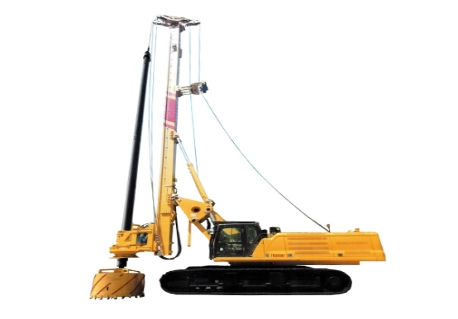
SINOVO Rig medium and large rotary drilling rigs include models for deep piles and large diameters. For example, our TR408H supports deep foundation work with high torque and can use different drilling tools such as short auger bits, rotary buckets, and core drill buckets. The TR468H is suited to large-diameter and deep-hole piles in complex geology, including cross-river and bridge foundation work.
The broader sinovo group equipment approach also helps buyers compare drilling rigs, piling tools, and support equipment together rather than treating each item separately.
What Contractors Should Check Before Buying
A smart purchase starts with the project, not the brochure. Buyers should bring clear jobsite information to the supplier before asking for a model recommendation.
Check these points first:
- Maximum pile depth
- Maximum pile diameter
- Ground report
- Expected rock layer
- Groundwater condition
- Casing requirement
- Daily pile output target
- Site access width
- Working height limit
- Transport restriction
- Tooling requirement
- Spare parts plan
- Local maintenance ability
- Operator training level
A reliable supplier should ask about these details before recommending a machine. On the sinovo site, contractors can review rotary drilling rigs, drilling tools, and related product categories before discussing a project with our team.
For projects that involve geological investigation, buyers may also review core drilling rig accessories to connect early ground study with the final foundation plan.
Conclusion
Rotary drilling rigs are a smart choice for deep foundations because they combine torque, crowd force, hydraulic control, drilling depth, and tool flexibility in one system. They help contractors form bored piles in mixed ground, large-diameter foundations, urban sites, bridge projects, and high-rise construction. The main value is not only drilling deeper; it is completing stable piles with fewer delays and better control. A good hydraulic rotary drilling rig must match the ground, pile design, access limits, Kelly bar, and tool package. For large projects, high-torque rigs can support deep and wide piles. For cities, urban height-limit piling rigs can keep work moving when space is tight. SINOVO Rig supports contractors with rotary drilling equipment and related foundation solutions for demanding projects.
FAQs
Q: Why are rotary drilling rigs used for deep foundations?
A: Rotary drilling rigs handle deep, large-diameter bored piles with strong torque and controlled drilling force.
Q: What depth can SINOVO Rig rotary drilling rigs reach?
A: Some models can reach more than 130 m, depending on configuration and ground conditions.
Q: Are rotary drilling rigs suitable for urban foundation work?
A: Yes. Low-headroom models can work in bridges, tunnels, factories, and restricted urban sites.
Recent Post