ABOUT US
Sed ut perspiciatis unde omnis iste natus error sit voluptatem
accusantium doloremque laudantium, totam rem aperiam,
GET A FREE QUOTE

Is a concrete pile crusher safer than traditional pile cutting?
-
 author
 - 11,September

For foundation contractors, pile head removal is just a minor project phase. Yet, it carries a huge safety impact. Site workers often have to break reinforced concrete. They must also expose the main reinforcement bars. After that, they remove damaged concrete and prepare the pile for the pile cap. The danger grows fast if this work makes too much dust, vibration, noise, or flying debris.
A concrete pile crusher is also known as a hydraulic pile breaker. This tool offers a safer choice over traditional pile cutting in most cases. Still, it is never safe by default. The actual benefits rely on the pile type and your equipment choice. Site layout, work sequence, and operator skill matter just as much.
You cannot just compare “machine versus manual work.” Instead, contractors must look at the whole working process. This review includes worker exposure and the control of broken concrete. It also covers the protection of reinforcement bars, daily equipment access, and basic maintenance needs.
Why traditional pile cutting creates safety concerns
Traditional pile cutting often uses handheld breakers, mechanical chisels, or saw cutting. Crews might also use other manual methods. These older techniques work well in tight spaces. They help most when you only need to clear a little concrete. However, a real hazard forms when workers stand right next to the pile for hours.
Contractors should check a few details before picking a new method. They need to see how much physical contact the job demands. They must also figure out if they can control the broken concrete easily. A task might seem easy at first. Then, it gets tough if the pile holds thick reinforcement or if the job site is packed.
Worker exposure to dust, noise, and vibration
Manual concrete breaking forces workers to face airborne dust and loud noise. It also causes steady hand-arm vibration. These negative effects turn worse on large projects. The harm builds up when crews repeat the exact same task all day long.
Traditional pile cutting often forces workers to stand right beside the breaking point. Because of this, they face extra exposure to:
- Concrete fragments
- Rebound from the breaker
- Uneven pile surfaces
- Sharp reinforcement bars
- Temporary support problems
- Noise from nearby equipment
These risks do not mean traditional cutting is always unsuitable. It means the method needs strict work controls, suitable personal protection, and enough space for workers to operate safely.
Damage to reinforcement bars
The purpose of pile head removal is usually to remove weak or unwanted concrete while leaving the reinforcement bars ready for connection with the pile cap. Excessive impact can bend, damage, or expose the bars in an uncontrolled way.
A pile head breaking machine can apply pressure around the pile in a more planned pattern. This can help separate concrete from the reinforcement zone. The result still depends on correct positioning and the condition of the pile, but the breaking force is easier to manage than repeated uncontrolled impact.
How a concrete pile crusher works
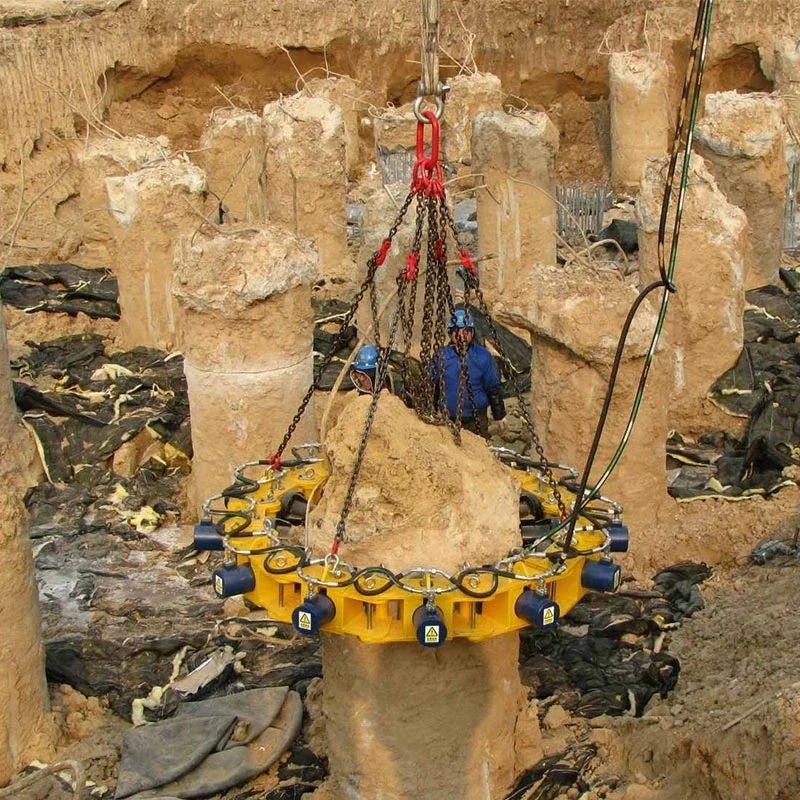
A concrete pile crusher uses hydraulic pressure to fracture concrete around the pile head. The equipment is usually assembled with several crushing sections, allowing the machine to work around different pile diameters. The exact arrangement depends on the equipment design and the pile dimensions.
The process normally follows a controlled sequence:
- Position the machine around the pile head.
- Check alignment and working clearance.
- Apply hydraulic pressure through the crushing sections.
- Break the concrete in stages.
- Remove loose concrete from the pile head.
- Inspect and prepare the reinforcement bars.
This approach can reduce the time workers spend directly striking the concrete. It may also produce more predictable breaking lines, especially when the equipment is correctly matched to the pile.
Why hydraulic pressure can improve control
Hydraulic pressure gives the operator a steady way to apply force. Compared with repeated manual impact, the process may create less sudden movement at the pile head. This is important when the project requires a clean pile top or when the reinforcement bars must remain in usable condition.
A hydraulic pile breaker does not remove every hazard. Operators still need to manage hydraulic hoses, pinch points, moving sections, falling concrete, and machine stability. The main advantage is that the most physically demanding part of the work can be moved away from continuous manual impact.

Is a concrete pile crusher always safer?
No. The answer depends on the site and the working method. A machine can reduce some hazards while introducing others. A poorly selected pile breaker, incorrect hydraulic connection, or weak exclusion zone can create serious problems.
Safety should be evaluated through the entire process rather than through the machine name alone. Contractors should consider:
- Pile diameter and concrete strength
- Number of piles to be processed
- Working height and access
- Excavator or carrier compatibility
- Hydraulic pressure and flow requirements
- Ground stability around the pile
- Reinforcement arrangement
- Removal and lifting plan
- Operator training
- Inspection and maintenance procedures
If the project has only a few small piles in a very tight area, manual or semi-mechanical work may still be practical. For a large foundation project with many piles, a concrete pile crusher may reduce repeated worker exposure and improve production consistency.
When pile crushers are especially useful
Pile breaking equipment is often most valuable when the project involves high pile numbers, repeated pile head treatment, or strict control of site conditions. Urban construction is a common example. Workers may have limited space, nearby buildings, traffic, and noise-sensitive areas.
The same concerns appear in metro stations, bridge foundations, industrial facilities, and high-speed rail construction. Recent project priorities also place more attention on labor safety, lower noise, reduced dust, and more controlled construction processes.
Urban and height-restricted projects
Urban height-limit piling rigs are designed for foundation work where ordinary equipment cannot operate because of restricted vertical clearance. Once the piles are formed, the pile head removal method must also fit the available space.
A crusher may be useful when it can be mounted and operated without creating an unsafe lifting arrangement. Contractors should confirm the full working height, access route, equipment weight, and removal process before bringing the machine into a restricted area.
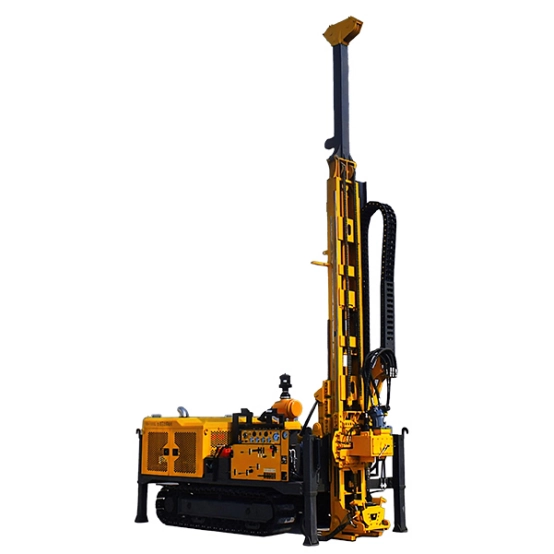
For pile formation, our rotary drilling rigs are used for foundation applications such as buildings, bridges, railways, and other deep foundation projects. The pile-breaking stage should be planned together with the original drilling method, pile diameter, and reinforcement design.
Projects with large numbers of piles
When dozens or hundreds of piles need treatment, repeated manual breaking can affect both schedule and worker fatigue. A mechanical process may offer better repeatability and reduce the amount of heavy hand work.
However, productivity should not be judged only by breaking speed. The entire cycle also includes positioning, hydraulic connection, concrete removal, reinforcement inspection, and relocation to the next pile.
Where traditional pile cutting still has a role
Traditional methods remain useful in some situations. A contractor may need to remove a small section of concrete, work inside a narrow opening, or handle a pile with unusual reinforcement. Saw cutting can also be suitable when a clean, shallow cut is required and the project can manage water, slurry, and electrical equipment safely.
The key is to select the method according to the required result. A hydraulic pile breaker is generally suited to repeated pile head breaking. Manual tools may be more flexible for small corrections or finishing work.
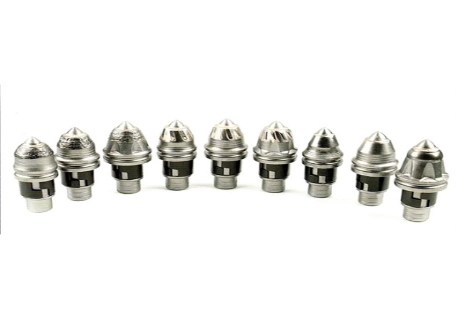
For technical investigation, core drilling rigs and accessories can support concrete or geological inspection work. Diamond core drilling may help contractors examine material conditions before deciding on a larger intervention, although it does not replace a complete pile-breaking process.
A core drill bit attachment can be useful for localized drilling or inspection. It should not be described as a complete substitute for a pile crusher. Buyers should confirm whether terms such as “corebit drill” refer to a tool, an attachment, or a general search label.
How SINOVO Rig approaches foundation equipment
At SINOVO Rig, we view pile head treatment as part of a larger foundation workflow. The drilling method, pile diameter, concrete quality, reinforcement arrangement, and site restrictions all affect the equipment decision.
Our product range includes foundation construction equipment, rotary drilling rigs, core drilling equipment, water well drilling rigs, and other underground construction machinery. This wider sinovo group equipment approach helps contractors review connected stages of a project instead of choosing each machine separately.
For difficult foundation conditions, our rotary drilling equipment includes models designed for large-diameter and deep-hole piling. The TR308H and TR360HT are examples of strong rock drilling machines in our range, while low-headroom full hydraulic equipment is intended for areas where working height is limited.
We also provide hydraulic piling equipment for contractors working on dense ground, bridge foundations, rail projects, and urban construction. On the SINOVO Rig website, buyers can review equipment categories before discussing the working conditions with our technical team.

A safety checklist before choosing the method
Before selecting a concrete pile crusher or traditional pile cutting method, review the following points:
- What is the pile diameter?
- How many piles need treatment?
- Is the pile reinforced concrete?
- How much concrete must be removed?
- Must the reinforcement bars remain undamaged?
- Is the ground stable around the pile?
- Is there enough room for the carrier and operator?
- Are overhead height limits present?
- Can broken concrete be removed safely?
- Does the team have the right training?
- Are hydraulic hoses, tools, and lifting points inspected?
- Is there a clear exclusion zone?
The answers will help contractors choose a realistic method. A concrete pile crusher may be safer and more productive for repeated work, but it should be integrated into a complete risk assessment.
Conclusion
A concrete pile crusher can be safer than traditional pile cutting when it reduces close worker exposure to dust, noise, vibration, flying fragments, and repeated manual impact. It can also provide more controlled pressure around the pile head and support a more consistent breaking process. Still, the equipment does not remove every risk. Hydraulic connections, pinch points, falling concrete, machine stability, reinforcement bars, and site access must all be managed carefully. Traditional cutting methods remain useful for small corrections, restricted tasks, and situations where a clean local cut is more important than high-volume production. The safest choice depends on the pile, the site, the equipment, and the work plan. Contractors should discuss these details with a qualified supplier before selecting pile-breaking equipment.
FAQs
Q: Is a concrete pile crusher safer than a jackhammer?
A: Often, yes. It can reduce manual impact, vibration, dust, and worker exposure.
Q: Can a pile crusher damage reinforcement bars?
A: It can if misaligned or misused. Correct positioning and operator control are essential.
Q: Is traditional pile cutting always unsafe?
A: No. It remains suitable for small, controlled, and properly managed cutting tasks.
Recent Post