ABOUT US
Sed ut perspiciatis unde omnis iste natus error sit voluptatem
accusantium doloremque laudantium, totam rem aperiam,
GET A FREE QUOTE

Can a rotary digging machine work efficiently in dense ground?
-
 author
 - 28,August

Dense ground is one of the biggest tests for any drilling team. It slows advance, raises tool wear, and exposes weak machine design very fast. For B2B buyers, the real question is not whether a rotary digging machine can work at all. It is whether it can keep a stable pace, hold verticality, and stay economical when the ground turns hard, tight, or mixed.
That question matters more now because many projects are happening in tough soil conditions: urban renewal, utility wells, road and rail foundations, and groundwater work in dry regions. Industry attention around water stress and mineral demand, including UNESCO’s latest water report and the IEA’s critical minerals outlook, shows why drilling capability is still a live business issue.
At SINOVO Rig, we often see buyers compare machines by depth alone. That is only part of the story. In dense ground, the better machine is the one that matches geology, tools, and job rhythm. Our products are designed for that kind of practical decision.
What dense ground means on a real jobsite
Dense ground is not one single material. It can mean compacted clay, mixed gravel, hard fill, weathered rock, cemented sand, or layers that have become tight after years of load and moisture change. These conditions do not just resist the bit. They also increase vibration, cuttings load, and energy loss.
A rotary digging machine can still be efficient in this setting, but only if the operator and the machine are both ready for it. The drill has to break material, clear it, and stay steady while the hole gets deeper. If one part fails, the whole cycle slows down.
Why compaction slows drilling
When soil is dense, the bit cannot bite cleanly. It scrapes more than it cuts. That means the rig needs more torque, stronger crowd force, and better tool control to make each rotation useful.
Common results include:
- lower penetration rate
- more heat and tool wear
- higher fuel use
- unstable hole walls
- more frequent rod handling
- greater risk of bounce or deviation
This is why a rig that works well in soft ground may feel tired in dense soil. The machine is not always weak. Sometimes the setup is simply wrong for the job.
Common signs the ground is too tight
You can usually spot the problem early. The rig may sound loaded even before the bit reaches full depth. Cuttings may come up slowly. The mast may shake more than usual. The operator may need to reduce speed just to keep the hole clean.
When that happens, the project is telling you something important. Dense ground needs more than brute force. It needs controlled force.

Which machine features decide drilling speed
Efficiency in dense ground comes from balance. You want enough power to break the formation, but you also want enough control to keep the hole straight and the tools alive. This is where the drill’s core design matters more than the brochure language.
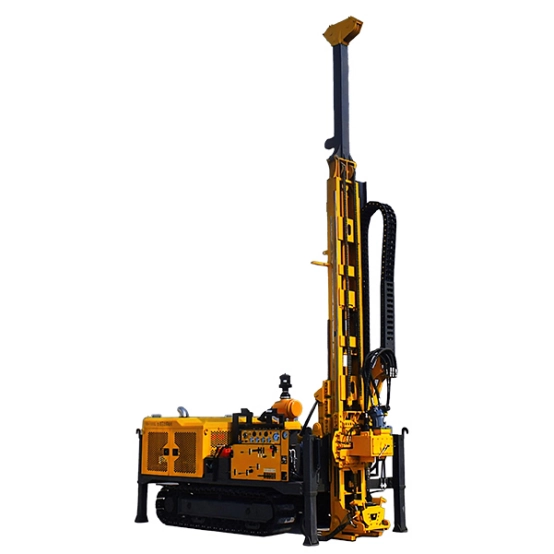
For buyers looking at a rotary drilling rig for dense ground, the main focus should be on power head behavior, feed system strength, and how well the rig handles the selected tooling.
Torque and crowd force
Torque is what helps the bit keep turning through resistance. Crowd force helps push the bit into the ground without losing contact. In dense ground, both matter. A machine with strong torque but weak feed may stall at the face. A machine with good feed but poor torque may only polish the surface.
For that reason, buyers should look for:
- steady torque output
- reliable feed pressure
- smooth rotation under load
- stable mast support
- good vertical control
This is also where operator skill matters. A good operator does not force the rig into a bad rhythm. He or she keeps the machine in its working window and lets the ground tell the pace.
Drill tools, kelly bar, and bit match
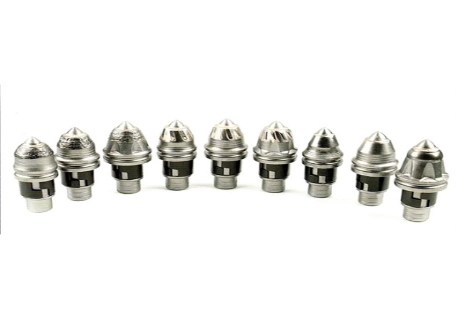
A rig is only as good as the tools on the end of it. In dense ground, the wrong bit can waste power fast. The wrong kelly bar can twist, bind, or shake under stress.
The best setup depends on the layer type:
- compacted clay may need a different cutting face than gravel
- weathered rock may need stronger wear protection
- mixed ground may need a tool package that can change fast
- deeper holes need more stable rod handling
If the project also involves geological testing, some teams pair rotary work with diamond core drilling to better understand the formation before final drilling.
Where rotary machines perform well
A rotary digging machine can work efficiently in dense ground when the project is matched to the machine class. That is especially true when the site needs fast relocation, repeated boreholes, or a mix of soil conditions rather than one simple layer.
At SINOVO Rig, we build drilling equipment for exactly that kind of work. Our rotary drilling rigs cover a wide range of torque and bore-size needs, and our team designs for real construction pressure, not just static specs. In projects where the machine must also support broader foundation work, buyers often compare it with a highly-efficient piling rig for high-speed rail construction, because both jobs demand stability, output, and careful control.
Urban foundation work
Dense ground is common in cities. Backfilled zones, old pavement layers, utility corridors, and compacted subgrade all create tough drilling conditions. In those environments, a machine must be compact enough to move quickly but strong enough to keep depth progress steady.
That is why many buyers first review the full SINOVO Rig products range. It helps them compare classes before they narrow down the exact model.
Water wells and geological jobs
Dense ground is also common in water well drilling and early-stage site investigation. A well site may start in soft topsoil, then hit tight gravel or weathered rock below. A geological job may need both penetration and sampling accuracy.
That is where the machine’s flexibility matters. A rig that can adapt across layers will usually save more time than a machine built for only one condition.

How SINOVO Rig approaches dense ground
SINOVO Rig designs equipment around practical field use. Our rotary drilling rigs cover a wide range of torque and bore diameter needs, and our water well drilling solutions are built to handle mixed formations, not just ideal soil. We focus on stable structures, useful power, and worksite efficiency.
The other thing buyers often notice is that dense ground is rarely the only challenge. Access may be tight. The site may be muddy. The bore may need to move from soft layer to hard layer in one day. The other thing buyers often notice is that dense ground is rarely the only challenge. Access may be tight. The site may be muddy. The bore may need to move from soft layers to hard formations in one day. For contractors working across changing conditions, Sinovo Group provides a dependable range of drilling equipment designed to adapt to different job requirements and deliver consistent performance on complex sites.
Product range and project fit
If your project is mainly water supply, a water well rig may be the better fit. If your work is foundation-heavy, a rotary model may give you more control in dense ground. If your job includes both geology and drilling evaluation, core tools may help you make a better decision before the main bore starts.
That is also why our team often talks about the whole drilling system, not only the rig itself. The right machine, the right bit, and the right site plan usually beat a bigger machine used in the wrong way.
When another drilling method is better
Rotary drilling is powerful, but it is not the only answer. Very hard rock, extreme fracture zones, or sampling-focused exploration may call for another method. In those cases, the goal is not to force one rig into every job. It is to choose the method that keeps the work stable and economical.
Buying checklist before you choose a rig
Before you sign off on a machine for dense ground, check these points:
- What ground layers will the rig face first?
- Is the site mostly compacted soil, gravel, or weathered rock?
- How deep is the bore, and how many holes are planned?
- Does the job need fast relocation?
- What tooling package is included?
- Is vertical control strong enough for the project?
- Can the machine stay productive without constant rework?
If the answer to most of these is clear, your purchase decision will be much safer.
Conclusion
Yes, a rotary digging machine can work efficiently in dense ground, but only when the rig, tools, and site conditions are matched well. Torque, crowd force, bit design, rod stability, and operator control all matter. Dense ground does not reward guesswork. It rewards a machine that stays steady under load and a team that understands the formation. For contractors comparing options, SINOVO Rig offers rotary drilling solutions built for real field pressure, from mixed geology to demanding foundation work. When the ground is tight, the best rig is the one that keeps moving without losing control.
FAQs
Q: Can a rotary digging machine work in compacted ground?
A: Yes. It can work well if torque, crowd force, and tools are matched to the layer.
Q: What is the biggest problem in dense ground drilling?
A: Poor penetration control. The rig may lose speed, stability, or tool life.
Q: Does SINOVO Rig have equipment for dense ground?
A: Yes. Our rotary drilling rigs and related products are built for mixed and tough conditions.
Recent Post