معلومات عنا
ولكن لكي تروا من أين ينشأ كل هذا الخطأ المتمثل في اتهام اللذة ومدح الألم، سأكشف لكم الأمر برمته.
احصل على عرض سعر مجاني

When Should Contractors Choose a Core Drilling Rig for Sampling?
-
 مؤلف
- 15,أكتوبر
A geological exploration project does not always require continuous rock core. Some boreholes are drilled to identify overburden thickness, collect cuttings, or install monitoring instruments. When geologists need to examine the actual rock structure and preserve the sequence of formations, however, a core drilling rig for sampling is the right choice.
Core drilling retrieves cylindrical rock samples that reveal lithology, fractures, weathering, alteration, mineralization, and geological contacts. These observations help exploration teams interpret subsurface conditions, evaluate mineral prospects, and plan follow-up drilling.
Exploration programs must balance reliable geological data with drilling efficiency, site access, and cost. Selecting the appropriate drilling method early can reduce unnecessary drilling while ensuring that the samples collected are suitable for logging, testing, and interpretation.
When a Core Drilling Rig Is the Right Choice
A core rig is not merely a smaller rotary machine. Its primary goal is to extract representative material from underground. This goal alters how contractors design the borehole. It also changes how they pick the bit, manage drilling fluid, and treat the sample after pulling it up.
Before picking gear, the crew must decide what details the job requires. If the sole aim is to make a hole, a different drilling technique might be quicker. However, if the aim is to study the rock closely, getting continuous or nearly continuous core samples is highly valuable.
The project needs intact rock samples
Contractors ought to think about a core drilling rig when engineers must inspect:
- Rock type and layer shifts
- Natural fractures and joints
- Weathering depth
- Mineral content
- Rock strength markers
- Fault zones
- Water-bearing cracks
- Contact lines between soil and bedrock
A bored hole displays depth, resistance, and drilling actions. A core sample displays the actual material. This difference is vital in tricky ground. Two formations might offer similar drilling resistance, yet they could have totally different fracture layouts or engineering traits.
The USGS Core Research Center proves how saved cores and cuttings aid studies of energy sources, natural hazards, and water supplies. For commercial contractors, this same idea works: real physical samples boost trust in a ground model.
The site carries technical or financial risk
Core sampling is particularly valuable when uncertainty about subsurface geology could affect an exploration decision. Examples include mineral targets with complex structures, faulted or highly fractured zones, altered rock, and areas where existing borehole information is limited.
A core drilling rig is often needed when:
- The exploration target requires reliable information about rock structure
- The area holds suspected faults or empty spaces
- Current geological data is lacking
- The job involves tough or heavily broken rock
- Engineers require samples for lab checks
- Water-bearing fractures may influence drilling and geological interpretation
In these cases, the sample is not just an extra paper. It is a key part of the choice-making process.
How Core Drilling Differs from Non-Core Rotary Drilling
Core drilling and non-core rotary drilling can both be used in geological exploration, but they produce different types of information. Core drilling retrieves a continuous or near-continuous physical record of the formation. Non-core rotary methods advance a borehole and commonly bring rock chips or cuttings to the surface instead of intact core.
This distinction matters when exploration teams choose how to investigate a target. Faster penetration may be useful for preliminary reconnaissance or overburden drilling, while intact core is generally more informative for measuring structures, describing contacts, and examining mineralization.
Intact core versus rock chips and cuttings
In core drilling, the bit carves a ring path around a middle rock column. The core goes into the inner tube. Next, it is pulled to the surface for a close look. The drill crew then notes the depth, recovery amount, cracks, and sample state.
In non-core rotary drilling, the bit breaks the formation into chips or cuttings that are carried to the surface by air or circulating fluid. These samples can help identify broad lithological changes and may support geochemical screening, but they generally do not preserve fracture orientation, vein relationships, or geological contacts as clearly as intact core.
Neither approach is universally better. The correct method depends on the geological questions, required sample quality, ground conditions, target depth, and exploration budget.
When non-core rotary drilling is more suitable
Non-core rotary drilling may be appropriate for exploration tasks such as:
- Rapid reconnaissance drilling where intact core is not required
- Advancing through unconsolidated overburden before coring bedrock
- Collecting rock chips for preliminary lithological identification
- Collecting drill cuttings for selected geochemical screening programs
- Drilling pilot holes to clarify depth to bedrock
- Investigating relatively uniform formations with limited structural-data needs
- Completing preliminary boreholes before a targeted coring program
For example, an exploration team may use non-core rotary drilling to investigate overburden or obtain an initial indication of subsurface lithology. If the investigation then requires reliable observations of fractures, veins, alteration, or mineralized intervals, diamond core drilling provides more detailed physical evidence.
The choice should also reflect drilling conditions. Unstable ground, groundwater, and difficult formations may require suitable casing, drilling fluid, or a change of bit and drilling method. Method selection should be based on the information needed, not simply on whether the rock is hard.
What Makes a Core Drilling Rig Suitable for Sampling?
Once a job demands samples, picking the machine gets more exact. Drilling depth is key, but it is not the sole thing to check. The rig must offer steady spinning, smooth feed, strong lifting, and enough adaptability for various core sizes and rock types.
Sampling quality can be hurt by shaking, too much drill pressure, bad flushing, or weak hole walls. Proper equipment lets the user manage these items during the whole process.
Rotation, feed, and hydraulic control
A proper core drilling rig must supply a good range of spin speeds. It also needs enough low-speed torque for solid rock. The feed unit must put on even pressure. It must do this without pushing the bit too harshly into the rock.
A hydraulic setup can assist the user in changing:
- Spin speed
- Feed push
- Lifting pace
- Drill head spot
- Rod moving
- Mud pump timing
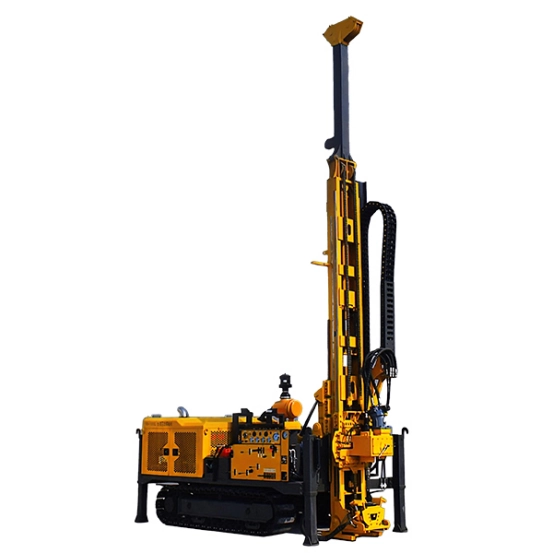
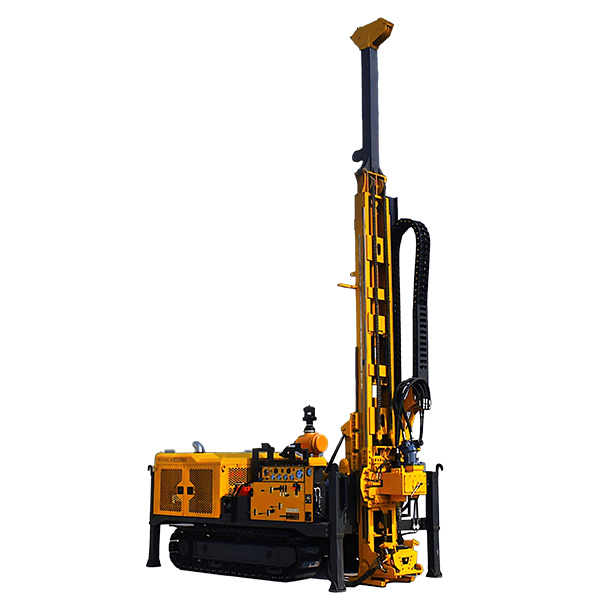
At SINOVO Rig, we supply full hydraulic core drilling gear. This is for geological checks and diamond wireline coring. Our SD1000 core drilling rig is built for deep core drilling. It supports diamond wireline coring and carbide drilling. Its stated drilling limits change based on the drill pipe and width. Therefore, buyers must pair the model with the needed depth and sample size.
Drill rods, core barrels, and bits
The drill string must be tough enough for the planned depth and rock type. The core barrel must guard the sample while pulling it up. The bit must slice well without causing too much harm to the core.
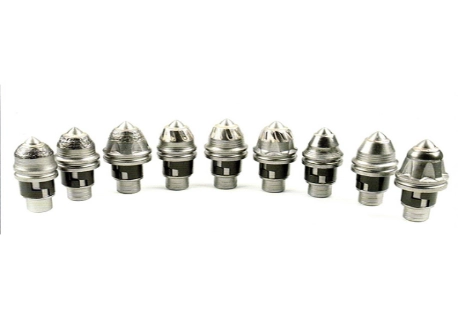
For solid rock, diamond core drilling is frequently chosen. The diamond-laced crown can slice strong rock with a fairly neat hole. A core drill bit attachment might work for a small spot check. However, it should not be mixed up with a full geological sampling setup.
The crew must verify:
- Core width
- Expected pulling rate
- Rock toughness
- Drill rod span
- Core barrel kind
- Bit crown choice
- Mud flow needs
- Sample handling steps
When Contractors Need Deep or Specialized Sampling
Some exploration programs require more than shallow reconnaissance holes. Deep mineral exploration and complex geological investigations may need repeated wireline coring runs and consistent recovery across long intervals.
A deeper job puts bigger strains on the rig. Rod moving, lifting power, cooling, feed control, hole steadiness, and upkeep all get much more vital as the depth grows.
Mineral and engineering exploration
A core drilling rig provides a physical geological record for mineral exploration, structural mapping, and rock-mass characterization. Core observations can help identify mineralized zones, distinguish lithological units, and guide the location and depth of follow-up boreholes.
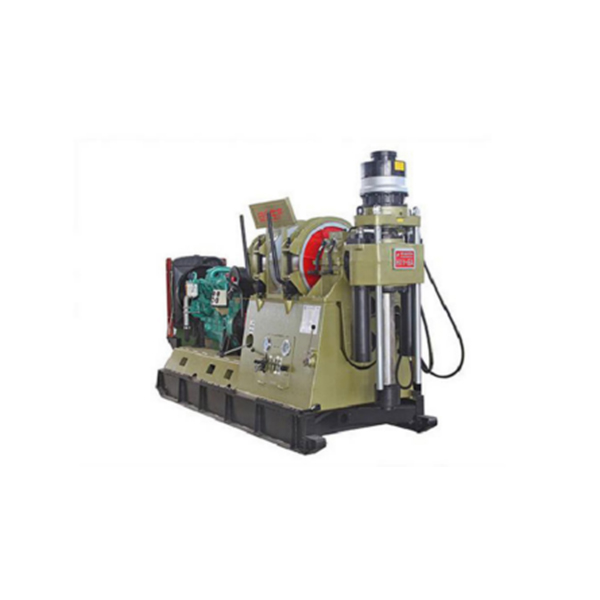
SINOVO Rig provides other core drilling choices. This includes the جهاز حفر اللب XY-6A. It is fit for diamond core drilling, wide-diameter hard alloy coring, and specific engineering drilling jobs.
Rig selection should follow the exploration program and its sampling targets. A deep-hole wireline system may be unnecessary for short, shallow investigations, while a lightweight rig may be inefficient for frequent core retrieval at substantial depths.
How Core Sampling Supports Geological Interpretation
Core samples connect measurements made at the drilling site with the subsurface geological model. By recording core depth, recovery, lithology, structures, and alteration, exploration teams can compare intervals between boreholes and improve their understanding of a target area.
Core logging can be combined with laboratory assays, geotechnical tests, geophysical surveys, and observations from other exploration holes. Each dataset contributes different evidence, while intact core allows geologists to revisit and verify important observations.
Use core data to refine the exploration model
Well-documented core can help answer questions such as:
- Where do important lithological contacts occur?
- What fractures, faults, veins, or shear zones are present?
- Which intervals show mineralization or hydrothermal alteration?
- How do weathering and rock quality vary with depth?
- Are groundwater-bearing fractures present?
- How consistent are geological units between drill holes?
- Where should the next exploration borehole be positioned?
SINOVO Rig offers core drilling equipment for geological investigation and exploration, including systems suitable for diamond coring. Equipment should be evaluated according to the planned drilling depth, formation conditions, core diameter, and recovery requirements rather than by comparing it with foundation piling machinery.
Before requesting a technical recommendation, an exploration team should specify its geological objectives, expected depth, required core size, rock conditions, access constraints, and whether wireline retrieval is needed.
What Contractors Should Check Before Buying
Before buying a core drilling rig, contractors must look at sample quality and machine power. A bigger rig is not always the smartest choice. This is true if the job needs easy movement, fast setup, or work on steep hills.
Review these details:
- Needed drilling depth
- Desired core width
- Expected rock toughness
- Needed pulling quality
- Diamond or carbide drilling way
- Wireline needs
- Drill slant
- Hydraulic system power
- Mud pump matching
- Rod handling method
- Crawler or truck moving
- Local fixing and spare parts
A core drill bit attachment might be fine for a small check. Meanwhile, a full wireline core drilling rig is better for repeated deep sampling. Contractors should state the planned use clearly. Then, the seller can suggest the proper level of gear.
خاتمة
Contractors should choose a core drilling rig when a geological exploration program requires intact rock samples to evaluate lithology, fractures, alteration, mineralization, weathering, or groundwater-bearing structures. Non-core rotary drilling may be efficient for reconnaissance and cuttings collection, but it does not provide the same continuous physical record as core. The best selection depends on sample quality, target depth, core diameter, formation conditions, recovery expectations, and site access. SINOVO Rig provides core drilling rigs and related drilling tools for geological sampling and exploration.
الأسئلة الشائعة
Q: When should contractors choose a core drilling rig for sampling?
A: Select one when whole rock samples are required to check layers, cracks, toughness, or groundwater states.
Q: Is diamond core drilling suitable for hard rock?
A: Yes. It is commonly used when contractors require neat cutting and solid hard-rock samples.
Q: Can non-core rotary drilling replace core drilling in exploration?
A: It can serve preliminary exploration tasks that only need chips or cuttings, but intact core is preferable when detailed structural and geological observations are required.
منشور حديث