
À PROPOS DE NOUS
Mais afin que vous compreniez d'où vient toute cette erreur qui consiste à accuser le plaisir et à louer la douleur, je vais vous révéler toute l'affaire.
DEMANDEZ UN DEVIS GRATUIT

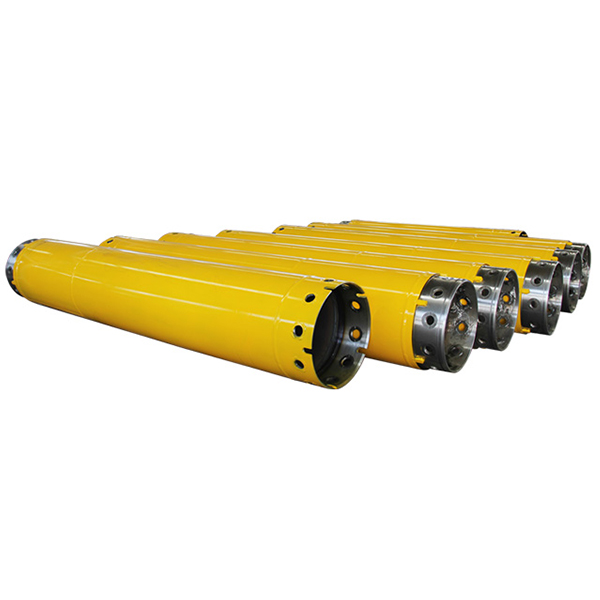
Friction vs. Interlocking Kelly Bars: Which Fits Your Pile?
-
 auteur
- 12,novembre
Two Kelly bars can have the same outside diameter yet behave differently once the drill reaches dense gravel or rock. The difference is not simply price. It is how the telescopic sections transmit downward force, how they extend and retract, and whether the assembly matches the rig that will drive it.
For bored-pile contractors, friction and interlocking Kelly bars should be compared against the ground profile, target depth and available crowd force. This guide explains the working distinction, then identifies the measurements that should be checked before ordering a replacement or a new drilling package.
What a Kelly bar does in rotary piling
The Kelly bar connects the rotary drive to the bucket, auger or core barrel at the bottom of a bored pile. Its nested steel sections extend to working depth and retract for tool lifting and spoil discharge. External drive keys transmit rotary torque between sections; the way the sections engage also affects the downward force available at the cutting tool.
SINOVO supplies both friction and interlocking designs in its Kelly bar product range. The choice should be made as part of the entire drilling system rather than treating the bar as an interchangeable length of pipe.
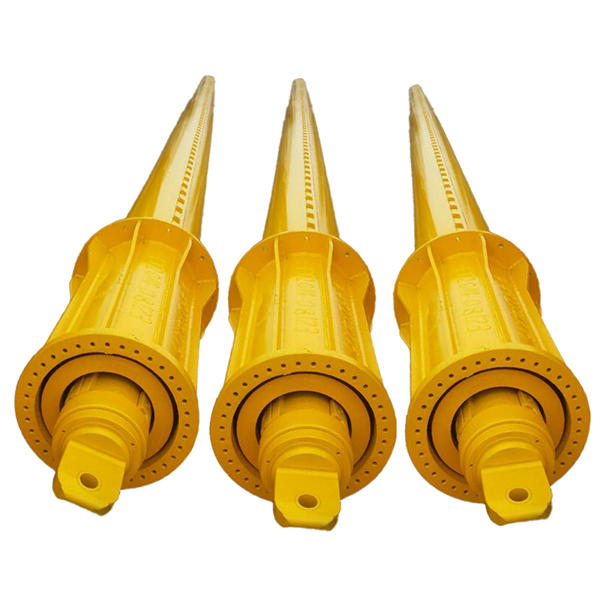
Friction Kelly bars: depth and smooth telescoping
A friction Kelly bar has no positive mechanical lock between its telescoping sections. Torque is still transmitted by the drive-key arrangement, but axial force transfer relies on frictional engagement rather than discrete locking shoulders. It is generally suited to soils where the tool does not require sustained high downward force.
That makes friction construction worth considering for many clay, sand and comparatively workable soil layers. It may also suit deeper holes when the rig and bar configuration permit more telescopic sections. This is not a promise that every friction bar drills deeper: useful depth depends on the actual section length, number of sections, rig geometry, tool length and site working method.
If the project report shows dense rock bands, large cobbles or a cutting tool that needs substantial crowd pressure, a friction bar should not be selected solely because its published depth looks attractive. Ask the supplier how force will reach the tool in the hardest planned layer.
Interlocking Kelly bars: positive crowd-force transfer
Interlocking bars incorporate engagement points that allow the telescopic sections to lock into position. With the sections correctly engaged, the rig can transfer higher axial crowd force to the drilling tool more directly. This is useful when a rock auger or core barrel needs controlled penetration in dense material.
Locking also changes operating discipline. The operator must know when each section is engaged, how to unlock during retrieval, and how to avoid loading a partly engaged section. The lock layout and wear condition matter as much as the label “interlocking.” Misuse can lead to damage or delays even on a correctly specified machine.
Interlocking is therefore a strong candidate for gravel with hard obstructions, weathered rock and more demanding bored-pile cutting. It is not automatically the best solution for every foundation: where the ground is easy and depth is the main challenge, the extra locking steps may not deliver a useful benefit.
Compare the working conditions, not the names
Site question | Friction bar: typical fit | Interlocking bar: typical fit
Predominantly workable soil | Often suitable where limited crowd is needed | Possible, but positive locking may offer little advantage
Hard or abrasive formations | Check whether available downforce is adequate | Often preferred where the tool needs stronger crowd transfer
Long design depth | Check telescopic section count and rig geometry | Check available locked configurations and practical depth
Operating cycle | Smooth section extension/retraction can be helpful | Allow time and training for engagement and release
These are selection tendencies, not load ratings. The bar manufacturer must confirm the allowable loads and compatibility for the quoted configuration.
A real SINOVO model shows why the details matter
SINOVO lists the TR228H rotary drilling rig with a maximum rotary drive torque of 240 kN·m. Its product specification also shows standard Kelly bar options of Ø440–6 × 14 for friction construction and Ø440–4 × 14 for interlocking construction. The different section counts illustrate why a buyer should not assume that both bars provide the same extension or operating behaviour.
The published rig data are available on the TR228H rotary drilling rig page. The listed maximum rig drilling depth is not a guarantee for every tool, Kelly bar and formation combination; request a matched bar-and-rig drawing showing the achievable working depth for the intended project.
For a larger machine, SINOVO also lists both types in its TR360HT configuration. That comparison is useful when checking whether the rig supplier has considered the bar type alongside rotary torque, crowd force and winch capacity.
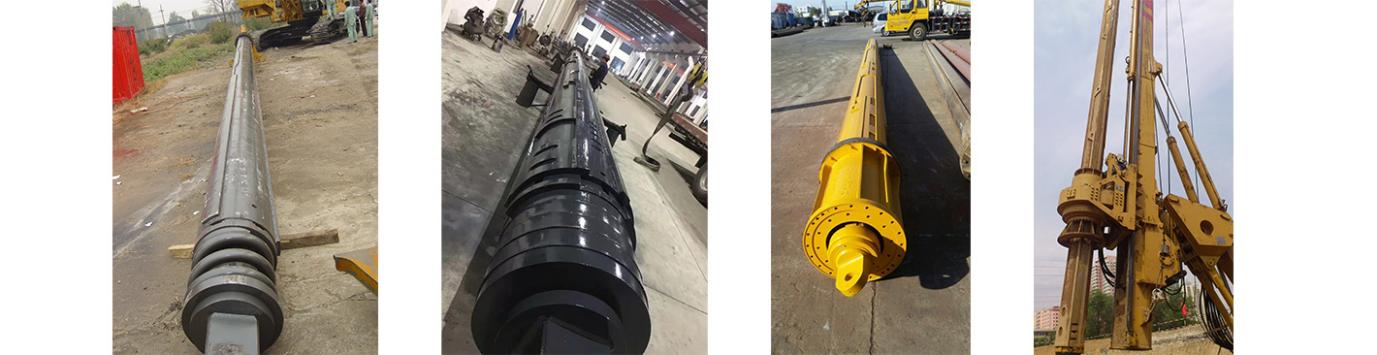
Five compatibility checks before you approve a bar
1. Confirm the rotary head and drive interface
Obtain the drive sleeve dimensions, external key profile, lower square-drive connection and any required adapter drawing. A correct outside diameter does not prove that the bar will fit another brand of rotary head or the chosen drilling bucket.
2. Match torque and crowd ratings separately
Ask for the bar’s rated torque and axial loading arrangements, then compare them with the rig’s rotary drive and crowd system. The weakest approved component controls the usable working envelope. Avoid assuming that a high-torque rig can push the tool harder through an unsuitable bar.
3. Calculate practical working depth
The extended bar length is not necessarily the drilling depth. Allow for the tool, usable overlap, rig mast and winch travel, ground clearance and any project-specific hole requirements. A supplier drawing is more reliable than a single “maximum length” entry.
4. Check the tool and ground programme
List the expected clay, sand, gravel and rock intervals, and the planned tools. SINOVO’s augers, buckets and drilling tools show why the cutting tool should be specified with the bar. A rock tool and an open soil bucket impose different forces and operating cycles.
5. Review wear and handling
Inspect drive keys, locking pockets, welds, stops, guides and end connections before installation. Ask for inspection limits, wear-part availability, lifting requirements and a clear procedure for assembling and separating sections. Damage at an engagement point can undermine an otherwise suitable selection.
What to send SINOVO for a configuration check
A practical inquiry should include the rotary rig make and model, rotary head details, target diameter and pile depth, ground investigation summary, proposed drilling tools and a photo or drawing of the existing Kelly connection. State whether the priority is greater depth, higher cutting force, replacement compatibility or a full new rig package.
For replacement bars, include the identification plate, section count, collapsed length and measured interfaces. For a new project, ask the supplier to confirm the complete drilling arrangement in writing, including the bar, tool connection, allowable loads and practical working depth.
Conclusion
Choose a friction Kelly bar when the ground and cutting tool can be handled without sustained high crowd force and the telescoping arrangement supports the required depth. Consider interlocking construction when harder formations demand positive transfer of downward force. Neither choice should be made without checking the exact rig interface and rated configuration.
Review the SINOVO Kelly bar range and contact SINOVO with your rig and geotechnical details to confirm a suitable bar rather than relying on a generic friction-versus-interlocking label.
FAQ
Can a friction Kelly bar drill through rock?
It may pass through some harder layers if the tool, rig and bar are suitably matched, but its axial force transfer can be limiting when strong crowd pressure is required. Confirm the actual conditions and ratings instead of treating “rock” as a single category.
Does an interlocking Kelly bar always drill less deeply?
No. Available depth depends on the exact section layout, rig and drilling geometry. Some friction configurations use more sections, but that pattern is not a universal depth limit for interlocking designs.
Can a Kelly bar be moved from one brand of rig to another?
Only after compatibility is confirmed. Drive keys, Kelly box size, coupling geometry, load ratings, winch and mast clearances all need checking. A similar diameter or nominal torque rating is not enough.
Article récent
Produits associés
Produits les plus vendus
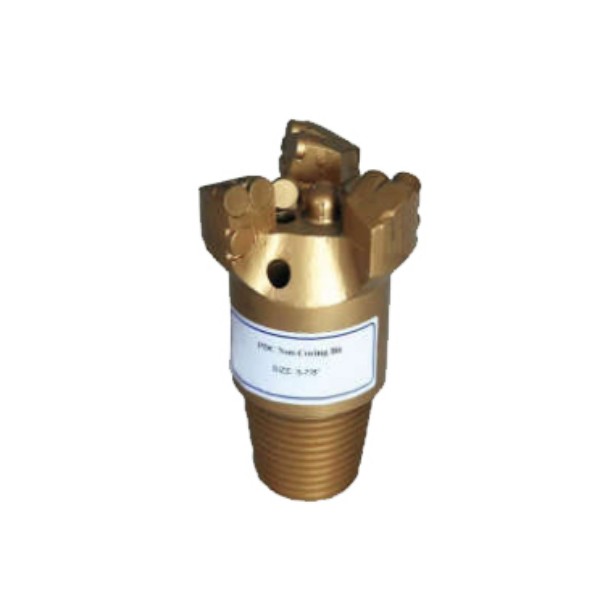
Mèche non carottante
Forets non carottants
Forets diamantés non carottants SINOVO pour le perçage des métaux et le carottage, certifiés CE/GOST/ISO 9001
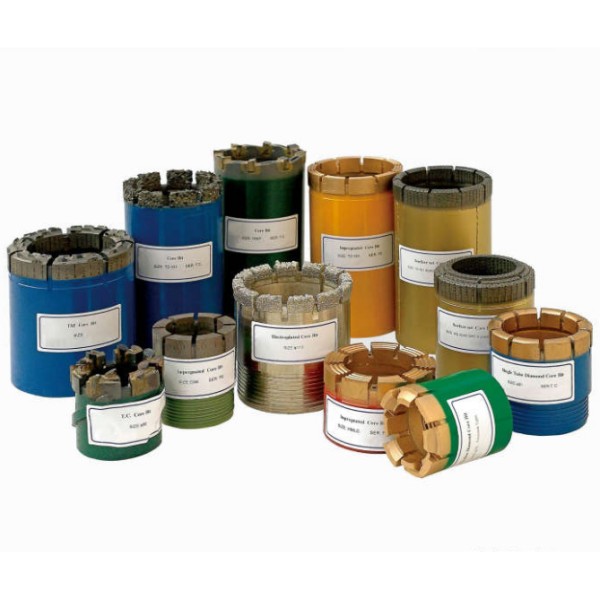
Foret à noyau
Foret diamanté pour le perçage des métaux et le carottage
Notre entreprise accorde une grande importance à la qualité de ses produits et s'engage à respecter ses engagements. Nous mettons tout en œuvre pour offrir à nos clients les meilleurs produits et un service irréprochable. Afin de garantir un service après-vente performant, nous avons établi une garantie de qualité conforme aux normes professionnelles et fondée sur notre expérience de terrain.
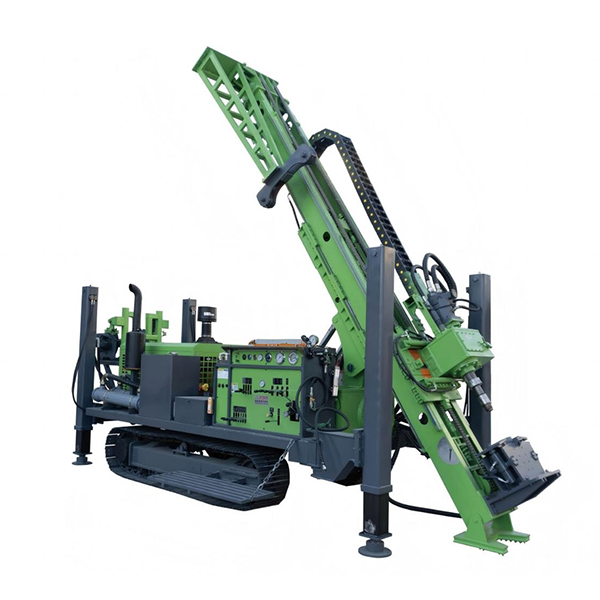
Foreuse à carottes entièrement hydraulique sur chenilles SY1600/SY2000
La foreuse à carottage hydraulique sur chenilles de la série SY1600/SY2000 est un modèle novateur conçu par notre société. Après une optimisation minutieuse et une conception innovante s'appuyant sur les technologies de pointe de foreuses similaires, tant nationales qu'internationales, cette foreuse est destinée au carottage au câble diamanté. Elle offre d'excellentes performances, une vitesse de forage élevée, une grande stabilité, une facilité d'utilisation, une sécurité et une fiabilité optimales, ainsi qu'une conception hautement intégrée. Compacte et fonctionnelle, elle présente un faible taux de panne et une maintenance simplifiée, améliorant ainsi considérablement l'efficacité et la qualité du forage.
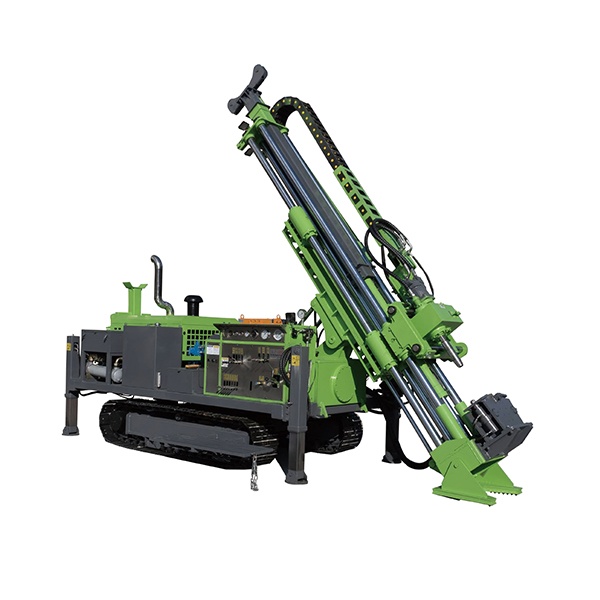
Foreuse à carottes entièrement hydraulique sur chenilles SY1000C/SY1200
La foreuse à carottage hydraulique sur chenilles de la série SY1000C/SY1200 est un modèle novateur conçu par notre société. Après une optimisation minutieuse et une conception innovante s'appuyant sur les technologies de pointe de foreuses similaires, tant nationales qu'internationales, cette foreuse est destinée au carottage au câble diamanté. Elle offre d'excellentes performances, une vitesse de forage élevée, une grande stabilité, une facilité d'utilisation, une sécurité et une fiabilité optimales, ainsi qu'une conception hautement intégrée. Compacte et fonctionnelle, elle présente un faible taux de panne et une maintenance simplifiée, améliorant ainsi considérablement l'efficacité et la qualité du forage.
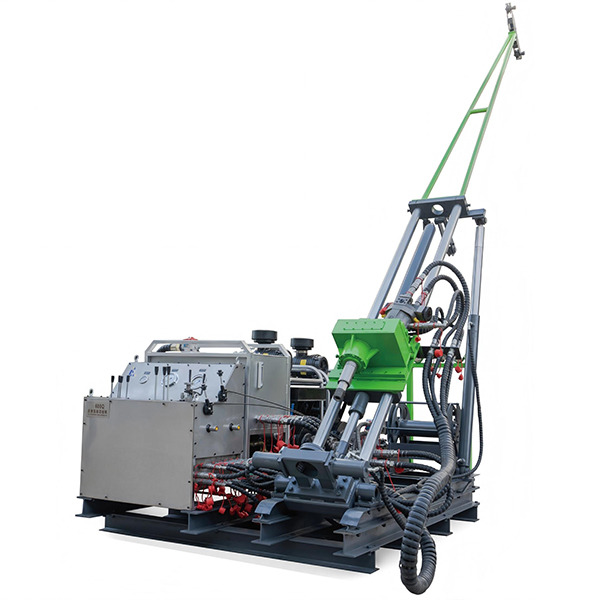
Foreuse de carottes hydraulique portable SY600Q/SY800Q
La foreuse à carottage portable entièrement hydraulique SY600Q/SY800Q, de conception légère et de matériaux sélectionnés, de conception modulaire, permet une utilisation sur tous les terrains, dans tous les scénarios et pour toutes les applications. Elle utilise une technologie de forage par carottage au fil diamanté à paroi mince, offre une efficacité de forage élevée, un assemblage simple, une utilisation en zone reculée, sans avoir besoin de construire de routes ni de détruire la végétation. La foreuse peut être transportée manuellement, ce qui la rend sûre et pratique.
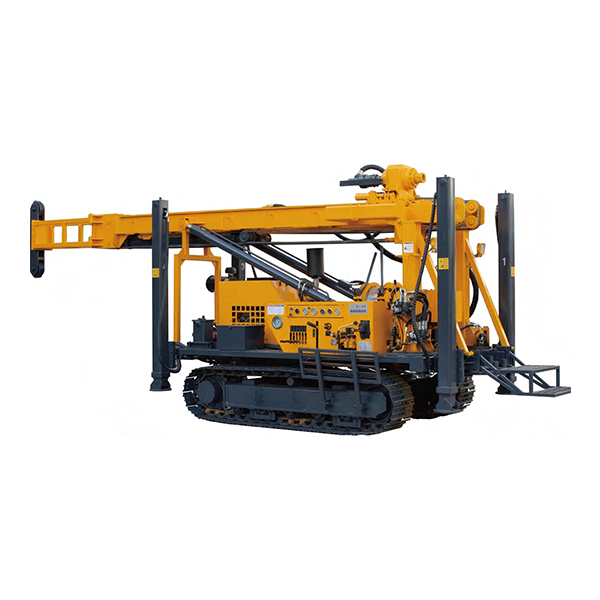
Appareil de forage à entraînement supérieur mécanique SDL350/XSDL350
La foreuse mécanique à entraînement par le haut SDL-350/XSDL-350 est un équipement de forage développé en interne par notre société. Capable de forer à 90°, elle combine les fonctions de foreuse à eau et de foreuse à air comprimé. Dotée d'une transmission manuelle à 5 vitesses, elle offre une large plage de vitesses, une commutation marche avant/arrière précise et aisée, un rendement de transmission élevé et une consommation d'énergie considérablement réduite, pour une efficacité accrue. Elle surmonte les difficultés de forage rencontrées avec les marteaux pneumatiques fond de trou dans les sols et la faible productivité des foreuses rotatives dans les roches dures, les graviers et les couches de cailloux.