À PROPOS DE NOUS
Mais afin que vous compreniez d'où vient toute cette erreur qui consiste à accuser le plaisir et à louer la douleur, je vais vous révéler toute l'affaire.
DEMANDEZ UN DEVIS GRATUIT

What rotary drilling equipment improves foundation drilling output?
-
 auteur
 - 18,septembre
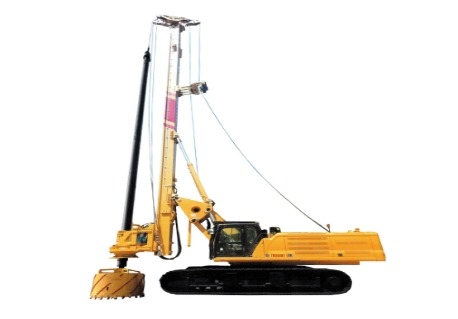
Foundation drilling output depends on more than the maximum depth shown on a machine specification sheet. Contractors need to complete more piles per shift, reduce idle time, maintain hole quality, and keep the equipment reliable under changing ground conditions.
The best rotary drilling equipment improves output by shortening the complete drilling cycle. That includes positioning, drilling, soil removal, Kelly bar handling, casing work, tool changes, and relocation. A powerful rotary head helps, but it is only one part of the system.
Recent construction pressure has made this question more important. Project owners expect better productivity while contractors face labor shortages, tighter schedules, restricted urban sites, and rising operating costs.
Start with the complete drilling cycle
Many buyers compare rotary rigs by torque and drilling depth. These figures are useful, but they do not show how quickly the machine can complete one pile and move to the next. A rig with strong power may still lose time if it has slow winches, poor tool matching, or difficult transport requirements.
A better approach is to examine every stage of production. The equipment should support the job from initial positioning to final pile formation, without creating unnecessary pauses between operations.
Power head performance
The rotary head controls how effectively the rig transfers power to the drilling tool. Torque helps the tool cut through dense soil, gravel, cemented layers, and weathered rock. Rotation speed affects soil removal and drilling control.
For foundation contractors, useful power head features include:
- Stable torque under load
- Adjustable rotation speed
- Smooth starting and stopping
- Strong rotary braking
- Good matching with different drilling tools
- Reliable performance during repeated cycles
A high torque rotary drilling rig is valuable when the site contains hard or mixed formations. However, excessive torque without proper control can increase tool wear and place unnecessary stress on the Kelly bar.
Crowd force and extraction force
Crowd force pushes the tool into the formation. Extraction force helps remove the tool when the hole is deep, tight, or partly obstructed. Both forces affect drilling speed.
If crowd force is too low, the bit may lose contact with the ground. If extraction force is insufficient, the operator may spend more time removing the Kelly bar or dealing with stuck tools. A balanced feed system helps maintain steady penetration and reduces interruptions.
Match the rig to the ground and pile design
No single machine is ideal for every foundation project. Soil, gravel, cobbles, weathered rock, groundwater, and unstable layers all create different demands. The machine should be selected after the contractor confirms the expected geology and pile design.
The same principle applies to pile diameter and depth. A small rig may be efficient for short piles and narrow sites, while a larger machine may be more suitable for high-volume work or deep bridge foundations.
Kelly bar selection
The Kelly bar transfers torque and crowd force from the rotary head to the drilling tool. Its strength, length, diameter, and connection type directly affect working depth and drilling stability.
Friction Kelly bars are often used for ordinary ground conditions. Interlocking Kelly bars provide stronger transmission when drilling in harder layers or when the tool needs better control at depth.
Contractors should check:
- Required drilling depth
- Maximum pile diameter
- Ground hardness
- Torque transmission
- Number of Kelly bar sections
- Transport dimensions
- Compatibility with buckets and augers
A properly selected Kelly bar can reduce tool vibration and make the drilling cycle more predictable.
Tools for changing ground conditions
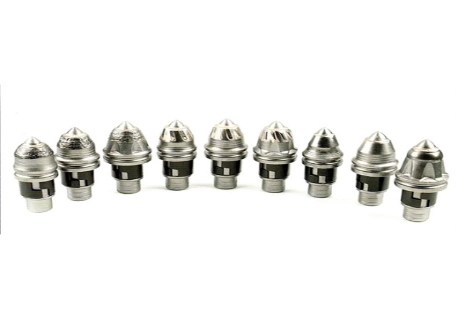
The drilling tool should match the formation. Clay buckets, rotary buckets, rock buckets, casing tools, and core drill buckets all serve different purposes.
For hard or fractured layers, some projects may use diamond core drilling for geological investigation before full foundation work begins. A core drill bit attachment or rotary hammer core bit may support localized investigation, but these tools should not be confused with a complete piling system.
Terms such as corebit drill may refer to a tool or attachment rather than a full drilling rig. Buyers should also clarify unusual labels such as rigcom combustible in technical quotations before comparing suppliers.
Hydraulic systems improve control and uptime
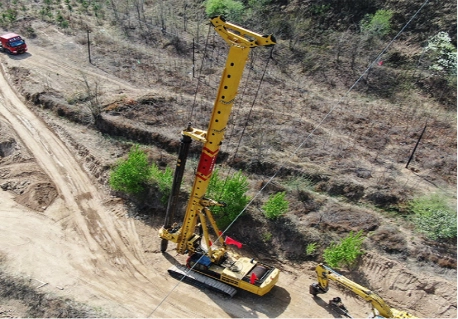
A hydraulic rotary rig can improve foundation output when its hydraulic system distributes power smoothly between the rotary head, crowd cylinder, winches, travel system, and mast.
The aim is not simply to create more pressure. The goal is to send the right amount of flow to the function that needs it, while keeping the machine stable and responsive. This becomes especially important when the rig changes from drilling to soil discharge, lifting, casing, or repositioning.
At SINOVO Rig, we focus on hydraulic and electro-hydraulic control because contractors need stable performance during repeated construction cycles. Our equipment is designed for deep foundation drilling, bridge work, railway construction, urban projects, and other demanding applications.
Reducing idle movement
A large amount of lost production comes from small delays. These may include slow mast movement, difficult rod handling, repeated alignment, or excessive time spent unloading soil.
A useful hydraulic system can help the operator:
- Position the mast more quickly
- Control feeding with greater precision
- Adjust rotation without sudden movement
- Operate main and auxiliary winches smoothly
- Reduce unnecessary corrections
- Maintain better verticality
The result is not always a dramatic increase in drilling speed. Often, the improvement comes from making every stage of the cycle more consistent.
Choose equipment for the project environment
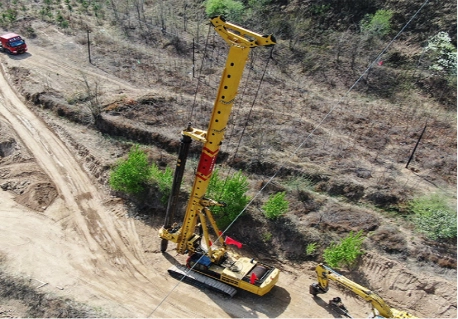
Jobsite conditions have a direct effect on output. A rig that performs well in an open field may be unsuitable for an indoor foundation, a bridge-underpinning project, or a narrow urban road.
This is why contractors should review the full rotary drilling rig range before choosing a model. Equipment size, working height, transport dimensions, crawler width, and assembly time can all affect the daily production rate.
Large foundation projects
For large buildings, bridges, metro systems, and high-speed rail projects, contractors often need high torque, large pile diameters, deep drilling capacity, and strong winches.
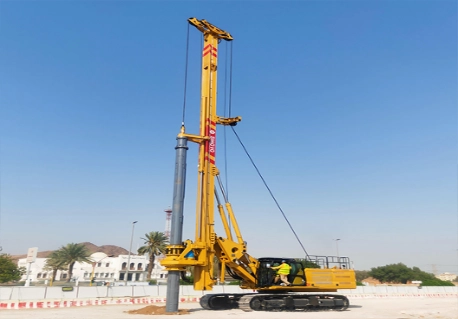
Our TR308H rotary drilling rig provides a maximum rotary torque of 300 kN·m, supports drilling diameters up to 2,500 mm, and reaches drilling depths of 90 or 95 m. Its crowd system provides 290 kN of crowd force and 335 kN of extraction force. These characteristics make it suitable for medium-sized and demanding foundation projects.
Our TR360HT is designed for rock and soil conditions. It delivers 360 kN·m of torque and supports pile diameters up to 2,500 mm, with drilling depths of 90 or 95 m. This type of machine is useful when foundation output depends on maintaining progress through strong or mixed formations.
Restricted and low-headroom projects
Urban construction creates a different challenge. The rig may need to work under bridges, inside factories, in tunnels, or near existing buildings. In these locations, a machine that is too tall or difficult to transport can reduce output before drilling even starts.
Our TR80S low headroom rotary drilling rig has a working height of approximately 6 m, a maximum drilling diameter of 1,000 mm, and a maximum drilling depth of 20 m. It uses a hydraulic system designed for compact foundation work.
The TR228S low-headroom model provides up to 240 kN·m of torque, supports pile diameters up to 1,500 mm, and reaches 50 m of drilling depth. These models show why urban height-limit piling rigs can be valuable for projects where access is the main production constraint.
Use complete equipment systems, not isolated machines
Foundation drilling output is affected by more than the main rig. Casing, tools, Kelly bars, spare parts, service access, and operator training all influence the final result.
At SINOVO Rig, our product range includes rotary drilling rigs, piling equipment, core drilling equipment, water well drilling rigs, and other underground construction machinery. This broader sinovo group equipment approach helps contractors plan related operations instead of treating each machine as an isolated purchase.
For projects requiring casing, contractors should confirm casing drive compatibility, casing shoe design, and the ability of the rotary head or casing oscillator to provide the required force. For geological investigation, core drilling equipment may help teams examine formation conditions before final construction decisions.
Le sinovo site also gives buyers a starting point for reviewing product categories and discussing project requirements with our team.
A practical buying checklist
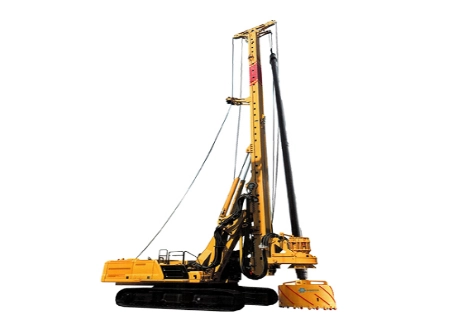
Before purchasing rotary drilling equipment, contractors should prepare the following information:
- Required pile diameter
- Profondeur de forage maximale
- Expected ground conditions
- Number of piles per shift
- Required drilling method
- Need for CFA or casing drilling
- Required Kelly bar type
- Site access and working height
- Transport restrictions
- Available hydraulic support
- Local maintenance capability
- Spare parts requirements
- Operator experience
Do not compare machines by torque alone. Review the relationship between torque, crowd force, rotation speed, winch performance, tooling, stability, and transport.
Conclusion
The rotary drilling equipment that improves foundation drilling output is the equipment that reduces the total cycle time while keeping drilling quality stable. High torque helps in dense ground and weathered rock. Strong crowd and extraction force support steady penetration and reliable tool handling. A responsive hydraulic rotary rig reduces idle movement, improves control, and helps operators manage changing conditions. The right Kelly bar, bucket, casing system, and drilling tools are equally important. For large bridge, rail, and building projects, high-capacity rigs such as the TR308H and TR360HT can support deep and large-diameter piling. For restricted sites, low-headroom equipment such as the TR80S and TR228S may protect productivity when working height is limited. SINOVO Rig helps contractors compare these factors and select a complete foundation drilling solution.
FAQ
Q : What rotary drilling equipment improves foundation drilling output?
A: High-torque hydraulic rotary rigs with strong crowd force and matched drilling tools usually improve foundation output.
Q : Which rig is suitable for hard foundation ground?
A: A rig with high torque, strong crowd force, stable Kelly bar transmission, and rock-compatible tools is suitable.
Q : Can low-headroom rigs maintain good drilling output?
A: Yes. Suitable low-headroom rigs can maintain output when diameter, depth, and ground conditions match.
Article récent