À PROPOS DE NOUS
Mais afin que vous compreniez d'où vient toute cette erreur qui consiste à accuser le plaisir et à louer la douleur, je vais vous révéler toute l'affaire.
DEMANDEZ UN DEVIS GRATUIT

What Makes a Water Well Drilling Rig Suitable for Hard Rock?
-
 auteur
 - 21,août
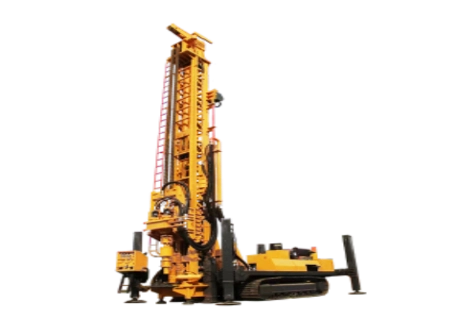
Water demand is no longer a quiet engineering issue. In 2026, groundwater access, drought response, rural water supply, geothermal projects, and mineral exploration are all pushing drilling contractors to work in harder, deeper, and less predictable formations. The UN World Water Development Report 2026 also keeps water access in the global spotlight, while the IEA Global Critical Minerals Outlook 2026 shows why drilling technology matters for resource security.
For buyers, the question is simple but serious: what makes a water well drilling rig suitable for hard rock? The answer is not only “more power.” A hard rock water well drilling rig needs the right drilling method, air system, torque, feed force, structure, mobility, and tool matching. If one part is weak, the whole job slows down.
Why Hard Rock Drilling Is Different
Hard rock does not forgive poor equipment selection. Clay, sand, and loose soil can often be handled with mud circulation and common rotary tools, but granite, basalt, limestone, bluestone, and heavily weathered rock need impact energy, strong cuttings removal, and stable feeding control. A rig that works well in farmland soil may struggle badly when it reaches bedrock.
Before comparing models, contractors should look at the whole drilling condition. Hard rock wells often involve unstable upper layers, water-bearing fractures, abrasive cuttings, and changing hardness from one depth to another. That is why equipment selection must start from geology, not only from the target depth printed on a brochure.
Rock Hardness and Abrasion
A hard rock water well drilling rig must manage both penetration resistance and wear. In dense rock, the bit face needs enough impact and rotation to break the formation. In abrasive rock, the bit, drill pipe, rotary head, and clamps face higher stress.
Common warning signs of poor matching include:
- Slow penetration even at high engine load
- Frequent bit damage
- Overheating tools
- Poor cuttings return
- Drill pipe vibration
- High fuel use with low drilling progress
These problems do not always mean the rig is weak. Sometimes the issue is the wrong bit, poor compressor matching, or an unsuitable drilling method.
Fractures, Water Flow, and Hole Stability
Hard rock is not always solid from top to bottom. Many water wells target fractured rock zones where groundwater moves through cracks. These fractures can bring sudden water inflow, broken rock, or partial hole collapse.
A good rig should allow the operator to adjust drilling pressure, rotation speed, and flushing method as the formation changes. This helps protect the hole, keep cuttings moving, and reduce the chance of stuck tools.
Key Features of a Hard Rock Water Well Drilling Rig
A rig suitable for hard rock is a balanced machine. Buyers often compare maximum depth first, but depth alone is not enough. A 200 m rig with poor air drilling capacity may perform worse in rock than a smaller rig with better DTH compatibility and stronger feeding control.
For contractors working in mixed formations, the most valuable machine is usually one that can move between mud drilling and air drilling without complex changes. This gives the team more freedom on real jobsites, where geology often changes faster than the plan.
DTH Hammer Compatibility
Down-the-hole drilling is one of the most common methods for hard rock water wells. A DTH hammer uses compressed air to drive impact energy directly at the bit. This breaks rock more effectively than simple rotary cutting in many hard formations.
A rig prepared for DTH work should have:
- Suitable air pressure range
- Enough air consumption capacity
- Strong rotary torque
- Reliable drill pipe handling
- Stable feed and lifting force
- Good dust and cuttings discharge
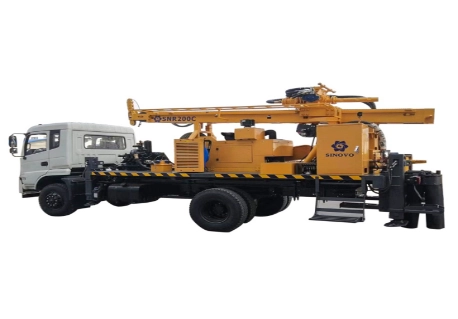
Par exemple, notre SNR200T water well drilling rig supports mud drilling and air drilling, with 1.25-3.5 Mpa air pressure and 16-55 m³/min air consumption. This range matters because DTH performance depends heavily on enough air volume, not only pressure.
Torque, Rotation Speed, and Feed Force
Hard rock drilling needs controlled power. Too little torque slows the job. Too much pressure with poor control can damage the bit or bend tools. Rotation speed must also match the bit and formation.
In harder rock, operators often use lower rotation speed with stronger impact energy. In softer or broken layers, they may raise speed to improve cuttings removal. A practical hard rock water well drilling rig should give the operator fine control rather than forcing one fixed drilling behavior.
Air and Mud Drilling Flexibility
Many well projects do not start directly in hard rock. They pass through clay, sand, gravel, and weathered layers first. Mud circulation can help carry cuttings, cool tools, and support the hole wall in soft formations. Once the rig reaches bedrock, air drilling with DTH hammer may become more effective.
This is why dual-method capability is valuable. A contractor can drill the upper section with mud, switch to air for bedrock, and adapt again if water-bearing fractures appear.
Choosing Equipment Around Real Jobsite Pain Points
Hard rock drilling is not only about breaking stone. The contractor also has to move the rig, set it up quickly, reduce labor, protect operators, and finish within budget. A powerful machine that cannot reach the site, or that needs too much support equipment, may not be the best choice.
On the SINOVO Rig products page, our products cover water well drilling rigs, rotary drilling rigs, core drilling equipment, reverse circulation drilling rigs, and foundation machinery. This matters for customers who handle different projects across water supply, civil construction, geological work, and piling.
Mobility in Remote Areas
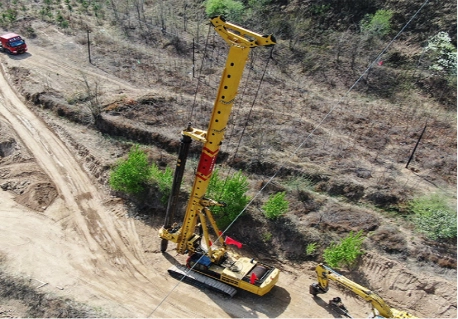
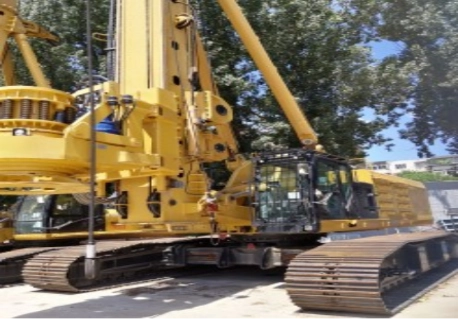
Many water wells are drilled in villages, farms, mountains, mines, or remote construction sites. The rig must travel through narrow roads, rough ground, and soft soil. Truck-mounted rigs are suitable where road access is good. Crawler rigs are often better for muddy, uneven, or sloped ground.
When choosing mobility type, ask:
- Can the rig reach the site without extra road work?
- Is the ground soft after rain?
- How often will the rig move between wells?
- Is fast relocation more important than maximum depth?
- Will the project need support trucks for compressor, pipes, and casing?
Hydraulic Control and Labor Reduction
Hard rock jobs are tiring and risky if too much work is manual. Hydraulic mast lifting, feeding, rotation, rod unloading, support legs, and winching reduce labor intensity and improve safety.
CAMION DU FILS designs drilling machinery for contractors who need practical field performance, not only attractive specifications. We focus on stable hydraulic systems, strong structures, and usable controls because small delays on hard rock sites can quickly become expensive. Our products are built for water wells, geothermal work, mineral exploration, civil construction, and foundation projects.
Rotary Drilling Rig Experience Also Matters
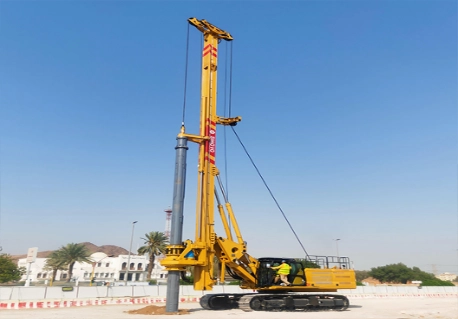
Although this article focuses on water well drilling, rotary drilling rig experience is closely related to hard formation work. Foundation piling projects face similar concerns: torque, crowd force, kelly bar strength, verticality, tool wear, and rock drilling ability.
SINOVO Rig provides rotary drilling rigs and tools for foundation piling including kelly bars, augers, casings, rock buckets, and spare parts. Some models are designed for deep bored piles, cased bore piles, CFA work, and complex foundation conditions. This engineering background helps us think about drilling as a complete system.
Search interest around terms such as sinovo group, sinovo site, and highly-efficient piling rig for high-speed rail construction also shows that buyers are connecting water, transport, foundation, and energy projects under one broader equipment decision. The same contractor may need a water well rig today and a piling rig tomorrow.
Tool Matching: Bits, Pipes, and Core Drilling Knowledge
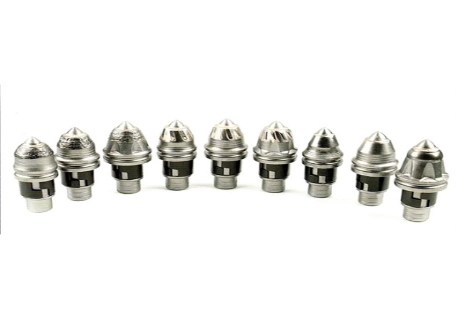
A rig cannot perform well if the tooling is wrong. In hard rock water wells, DTH bits must match the hammer size, compressor output, bore diameter, and rock type. Drill pipes need enough strength and straightness. Clamps must hold firmly during rod handling.
Diamond core drilling knowledge also helps in geological evaluation. Contractors involved in exploration often ask how to use diamond core bit for geological exploration because core samples reveal formation structure, fractures, and mineral signs. SINOVO Rig also supplies core drilling rigs and diamond bits for coring projects, which supports customers working across water wells, geology, and resource exploration.
For hard rock wells, good tool matching should consider:
- Bit face design
- Button shape and carbide quality
- Hammer size
- diamètre des tiges de forage
- Hole diameter
- Air compressor output
- Target depth
- Expected water-bearing zones
Common Buying Mistakes to Avoid
Many buyers choose a water well drilling rig by looking only at price and maximum depth. That can be costly. A lower-priced rig may become expensive if it drills slowly, damages tools, or needs constant repair.
Avoid these mistakes:
- Buying based on depth only
- Ignoring compressor requirements
- Choosing poor-quality drill pipes
- Using one bit type for all rock
- Overlooking local terrain
- Forgetting spare parts supply
- Underestimating operator training
- Treating mud drilling and DTH drilling as interchangeable
A suitable hard rock water well drilling rig should match the ground, the crew, the transport condition, and the business plan. It should drill efficiently, but it should also be serviceable and stable over many jobs.
Conclusion
A water well drilling rig suitable for hard rock is not defined by one big number. It needs DTH capability, enough air pressure and air volume, proper torque, stable feed force, strong hydraulic control, reliable tool handling, and good mobility. The best choice depends on geology, target depth, bore diameter, access roads, support equipment, and the contractor’s daily workload. As groundwater, geothermal, infrastructure, and exploration demand continue to rise, buyers should choose a rig that can handle mixed formations and real field pressure. SINOVO Rig supports these needs with practical drilling equipment and foundation machinery built for demanding jobsites.
FAQ
Q : What is the best drilling method for hard rock water wells?
A: DTH air drilling is usually best for granite, basalt, and other hard rock.
Q : What air pressure does a hard rock water well drilling rig need?
A: Many rigs work around 1.25-3.5 Mpa, depending on hammer and depth.
Q : Can one rig drill clay, sand, and hard rock?
A: Yes. A mud and air drilling rig can handle mixed formations.
Article récent